
Virtual Church Tour
Take a look around St. John’s Episcopal Church




The Church
The current church was built following the Great Fire of 1831, which destroyed much of downtown Fayetteville including the original church building. It features a white stucco exterior and plaster interior with wooden wainscoting. The main seating area has a large center aisle and two smaller side aisles. Rows of pews flank each side of the center aisle and are divided in the middle, seating 4-5 people on each side.
The church seats approximately 350 people. The nave features a gallery across the back and up each side, providing additional seating. The rear portion of this gallery is home to the mahogany pipe array and console of the church's organ and is where the choir is seated during services. Beautiful stained-glass windows, imported from Germany near the turn of the 19th century, are found on all four walls of the church.
There are eight primary windows in the nave – four on each side wall – and three windows in the chance. The windows of the nave depict biblical scenes, including the birth of Christ, while the windows in the chancel depict St. John in the center, flanked by St. Paul to the left and St. Timothy to the right. The church is built in Neogothic style and features twin primary steeples, each surrounded by four smaller steeples, all covered in soldered lead sheeting. The church is listed on the National Registry of Historic Places.
The Kyle House
The Kyle House was purchased by St. John’s from the city of Fayetteville in 1991. The building, which is adjacent to the church property, had housed the mayor’s office and city administration offices. The brick residence was built by prominent merchant James Kyle in the mid-1830’s, following the great Fayetteville fire, which destroyed much of downtown Fayetteville in 1831. Mr. Kyle, an instrumental parishioner in St. John’s early history, built his home beside the church to replace his previous residence on Market Square.
Built in Greek revival style, the Kyle House is one of the oldest surviving residences in Fayetteville. While St. John's now ows it, the Kyle House didn't fully become incorporated into the parish campus until renovations in 2002, which included a new corridor connecting the parish hall to the rear of the Kyle House, along with renovations of the Kyle House kitchen into a modern serving kitchen.
We use the house for many of our church functions, including Christian Formation classes, church receptions, and meetings. It features four main rooms downstairs, including a spacious dining room, with additional rooms upstairs. The upstairs rooms are used as classrooms; however, one of them has been renovated into a bridal dressing room. Modern restroom facilities have been added to both floors.
The house is distinguished by its columned front porch, tall front windows and wrought-iron balustrade above the porch. Inside, it features 16-foot ceilings downstairs and 12-foot ceilings upstairs. The thick plaster walls were originally filled with sand for insulation and fire safety. One of the most standout architectural features is the six-pointed mother of pearl star inlaid into the base of the banister. Known as a “builder’s button,” this star indicated that the home was paid for when it was completed.
The house served as a residence for numerous generations of the Kyle family until 1961, when it was sold to the city. It is listed on the National Register of Historic Places.
The Garden
Visitors and parishioners alike enjoy the quiet charm of our garden and outdoor chapel, located on the north side of the parish campus.
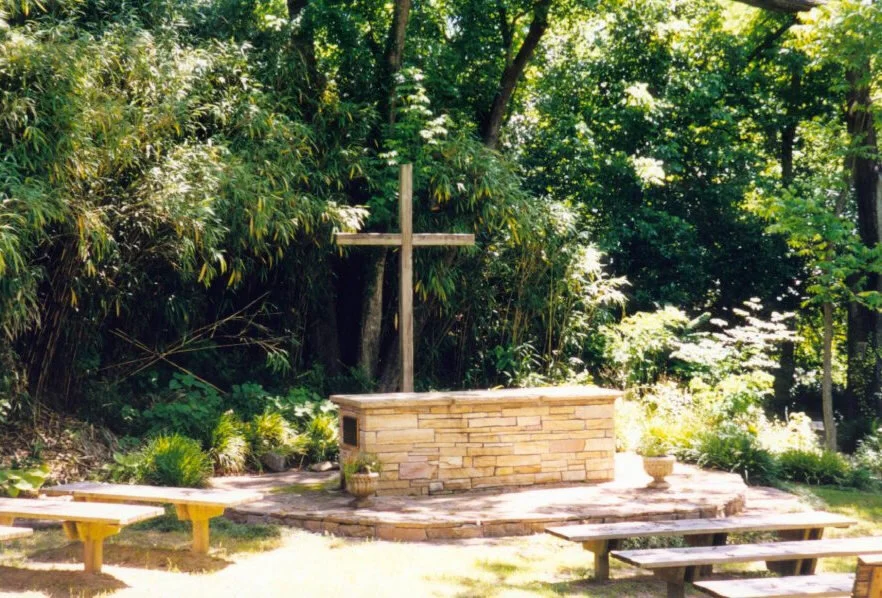
The outdoor chapel, the first project initiated of the two, has been a fixture since the late 1980’s. The site is shaded by several large oak trees and has been designed as a primarily natural setting. When not being used for church services, it is a wonderful place to mediate and enjoy a few moments of solitude just a few steps away from a busy urban setting. Much of the site work and upkeep has been performed by members of St. John's, receiving a facelift in 2007 by member Owen Shearer as part of his Eagle Scout project. The chapel includes a permanent stone altar, several rows of wooden pews, and a wooden deck overlooking the creek below. It is used periodically for services such as the annual Blessing of the Animals.
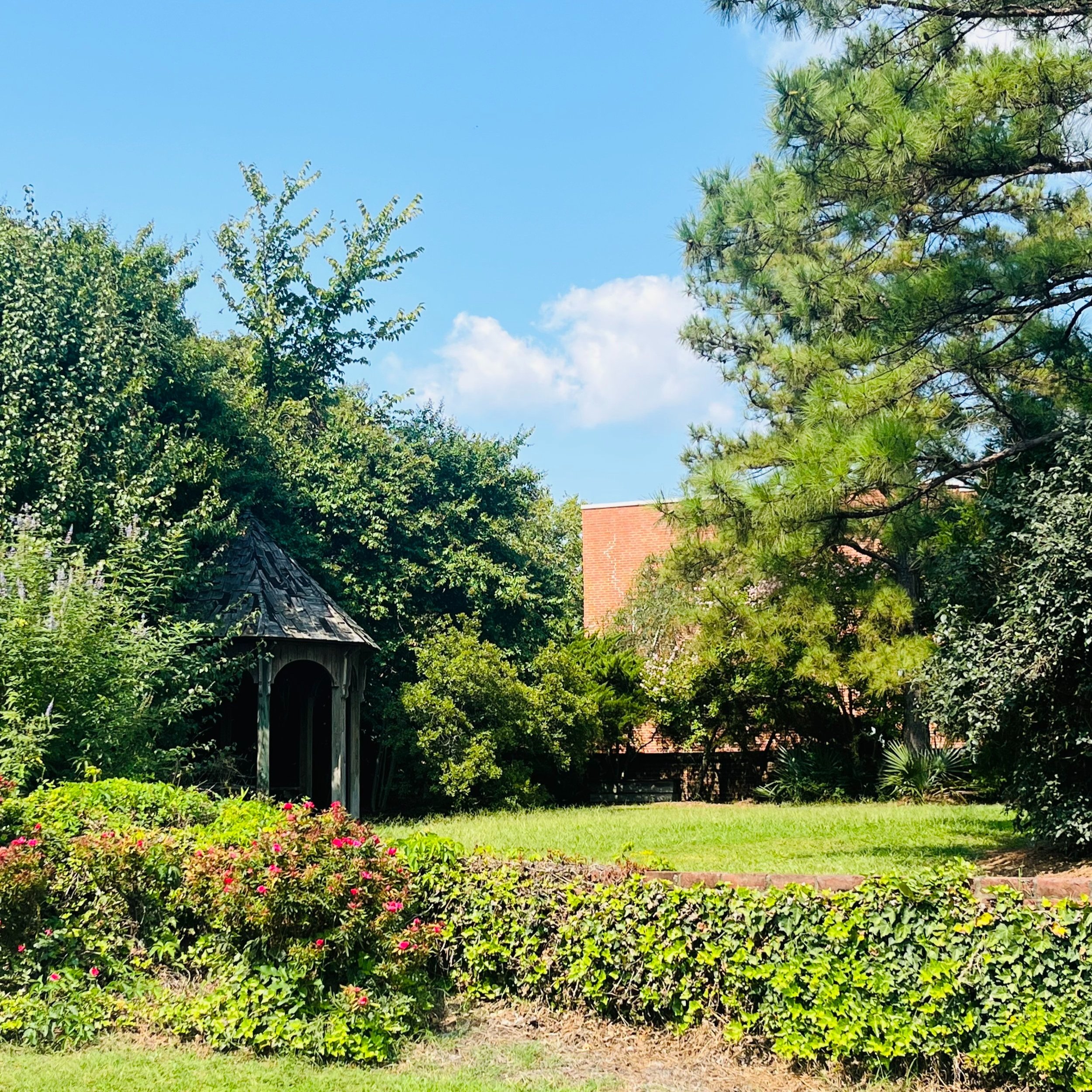
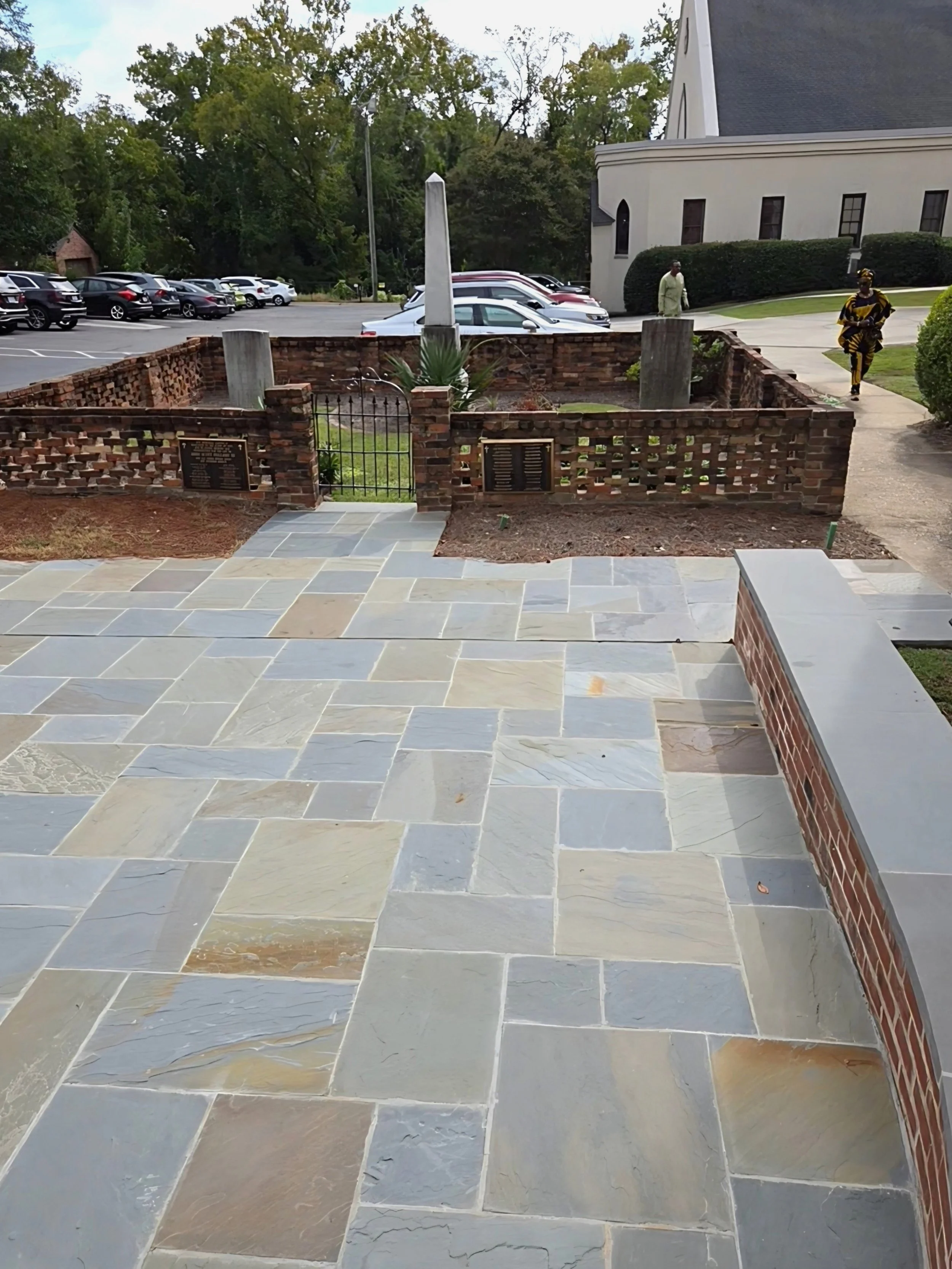
In the early 1990's, construction began on the garden area, which was designed by parishioner Walter Moorman Jr. A serpentine brick wall was among the first additions, given as a memorial to William deRosset Holt, Hannah Pickett Holt and Charles Calvert Holt by their family.
The first plantings were the mondo grass seedlings placed on the streetside berm in July 1991. They were followed by hundreds of spring and summer bulbs and annuals, along with a perennial bed. Two natural wooden benches were added to the garden, designed to resemble church pews.
Much of the work on the garden was performed or supervised by the late Augusta Knight, who made it her ministry to St. John’s. Also instrumental in the garden’s development was parishioner Patti Hutaff.

Smithson Hall
Smithson Hall was constructed as part of the church’s 47,755-square-foot construction and renovation project in 2002. It features a full-size basketball court, stage area, dressing rooms and storage space. Portable bleachers line one wall for basketball games and other spectator events. The multi-purpose room is the largest indoor meeting space in downtown Fayetteville. It was the primary site of the 2006 annual convention of the Diocese of East Carolina. In addition to performances and indoor sports and fitness programs, the space can be used for large receptions. It is conveniently located near the church kitchen. The space was designed to reflect the fact that it is a church property. It features arched windows and large wooden crosses at each end. The wooden floor features a hand-painted picture of the church’s distinctive steeples.
Parish Hall
The current Parish Hall was built in two phases. The first phase was completed in 1966, and the second was part of a major expansion and renovation undertaken by St. John’s in 2002. The Parish Hall houses the church’s clergy and administrative offices, a kitchen and dining facilities, Christian education classrooms, the Sacristy, and choir room. It also features a library, a Serenity Room, vestry meeting room, and gift shop. The Parish Hall was named Hauser Hall in 1974, following the retirement of St. John’s longtime rector, The Rev. Roscoe C. Hauser. The Parish Hall features nursery and preschool facilities on the ground floor and is also connected to the Kyle House, a historic residence adjacent to St. John’s that was built in 1838 and was purchased by the church in 1991.

The Chapel
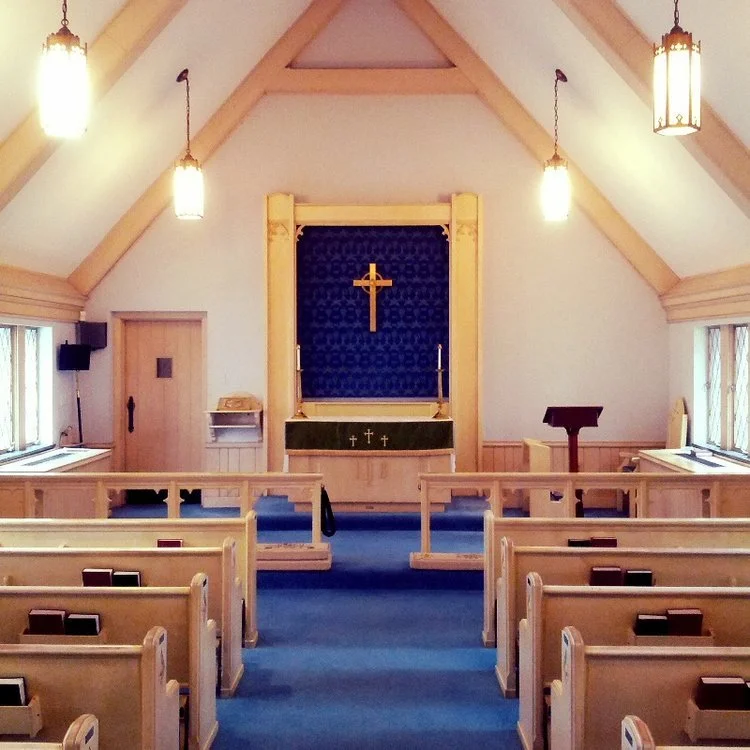
The Chapel of the Beloved Disciple is available as a more intimate setting for special services at St. John’s. It was built as part of a major construction project in 1966 to replace the Parish Hall and old chapel building. The chapel seats approximately 50 parishioners and is used each week for Wednesday services, as well as other special services throughout the year. The high-pitched chapel ceiling is supported by exposed wooden beams, which have a cream-colored antique finish. This finish is also used on the pews, altar rail and other wood-trimmed surfaces. It features a single center aisle, leading to a small sanctuary with a suspended brass cross.